In a country that is already bleeding due to terrorist attacks from across the border, the recent attacks by Maoists on the CRPF troops in Dantewada forest region, emphasizes that equal importance should be given to acts of violence from within the country.
Dantewada is another macabre manifestation of the heinous crimes that are committed against innocent civilians and government servants by the Maoists. While it is a ghastly act that needs to be condemned by all the responsible citizens, it is also time to take notice of how to tackle the menace of Maoists which is spreading like a lethal virus across the country.
Time and again the Government of India has tried to engage the Maoists in discussions in understanding their ideological issues, but the time has come to realize that such forces should be tackled with bullets and not through discussions.
The Government should immediately act in bringing not only the perpetrators of Dantewada to justice but should focus on the other elements that are supporting the Maoists across the country. The source of funds for the Maoists should be tracked down along with cutting off their political patronage if any.
It should be ensured that these atrocious criminals are not called once again to any round table but were brought to justice as soon as possible.
Sunday, April 11, 2010

Friday, April 2, 2010
Right to Education
Wherein his predecessors were more concerned with higher education reforms concentrating on the IIM’s, Kapil Sibal have taken a much welcome shift concentrating on Education at the grassroots level. The Right to Education is a landmark act in the history of India addressing one of the plaguing issues of the Indian Society.

As mentioned by Mr. Sibal, “The bill provides a framework for quality education and access to it” providing the right direction for primary education in India. The keyword to note is Quality and ensuring access to Quality Education across the cross section of society. However this will depend on the multiple stakeholders and their interests, right from parents, teachers, educational institutions and the society as a whole.
The commendable part of the bill is the delineation of Literacy from Education, whereas literacy is defined as the ability of a person above the age of 7 to read and write, education is much more than literacy enabling comprehension. So it is time to do a reality check as to what are the gaps that needs to be filled in order to achieve the ambition of 100% access to primary education.
In 2005, Prime Minister Manmohan Singh mentioned that only 47 out of 100 children enrolled in class I were able to reach class VIII. This puts the dropout ratio at 52.79%.
19% of the total primary schools in India are single teacher schools. 42 million students in the age group of 6-14 do not attend school due to various reasons like accessibility, poverty, inadequate quality of education etc. 16.64 % of the country’s villages do not have any primary schooling facilities. Teacher absenteeism ranges from 15% in Maharashtra to as high as 42% in Jharkand. The teacher-student ratio in India is 1:42, whereas in Bihar alone it is 1:83. (Sourcehttp://www.unicef.org/india/education_1551.htm)

The reality seems bad enough as the data points out the jarring gap in infrastructure and the ambitious goal of achieving quality education for all children. So the first step will be to set appropriate incentives for each of the above-mentioned stakeholders. (The mid-day meal scheme was one such incentive prompting the child to attend school).
Similarly in order to get Quality education, Quality Teachers are a necessity which unfortunately India lacks due to the miniscule pay scale set for the teaching community. A performance based incentive for the teaching community which is at par with any other industry should be set. The performance of a teacher can be measured as the pass percentage of his/her students based on which incentives can be set.
The bill targets compulsory education till 14 years of age or till Class VIII only. Whereas the syllabus is set in such a way that real education starts only after the age of 14 for a child. While primary education will concentrate on ensuring literacy, Education will begin only after the age of 14. But with the kind of startling statistics with respect to education in India achieving 100% literacy in the first place will prove to be a herculean task for the policymakers.
The bill is only a signboard which points to destination miles away and not the destination itself.
Sunday, February 28, 2010
Rin Vs Tide
Yesterday i saw this ad from Rin which was a direct dig on the competitor detergent brand Tide. Don't know how long this campaign has been on or the history behind it, as weekends are the only time i am getting nowadays to watch TV. But rather than directly classifying this ad as illegal or uncompetitive, just thought or trying to think from the point of view of HUL, as to what might be the strategy behind such a ad campaign that can lead to a possible lawsuit from P&G's Tide.
Will it be actually true that RIN can provide more 'safedi' to clothes rather than Tide. Is there any scientific proof that RIN is superior to Tide, which HUL is taking to its advantage of to educate the consumer. Is HUL trying to prove a fact by making a statement, which could possibly be true, and in that way trying to help the confused consumer who is entangled and bored with the run of the mill ad campaigns which are hitting them from multiple directions. Is HUL trying to provide direct facts to the consumer, and in that way enabling him to compare two different products, in a objective and direct way. Is this giving raise to a new paradigm in ad making which seems to be more objective at the outset. This is one way of looking into the advertisement.
But the question remains that if HUL is so concerned about providing objective data to the consumer, why not do a comparison between RIN and Surf, both of which are the products of HUL. It is a very well known fact that Surf Excel is positioned and priced as a high end product when compared to RIN which is more of a lower end product in comparison. But leaving the comparison in terms of positioning and pricing why not provide a comparison of the first P, the product, between Surf and RIN. Or even for that matter of fact between Wheel and Rin.
The conclusion is clear as light, no organization actually cares about educating the consumer or even showing a concern towards the end user. All a brand wants is to spread, and even if it requires to kill the other brands with their vitriolic campaigning in the name of providing facts. Should wait and see what will be the response from P&G with respect to this...
Saturday, December 26, 2009
A Taxing Task
Three years back, I remember receiving my first paycheck when I was worried about the amount going away as income tax. New to the whole idea of tax saving options, which are available, I went to a Tax consultant, to seek his advice on these tax saving instruments.

He suggested the best way, or so did he call it, for tax savings the ULIP or Unit Linked Insurance Plans, which offer both insurance and investment returns. I bought both the idea and ULIP as a gullible rookie as far as tax savings go.
Again in the same year I thought of investing in some other tax-saving instrument and opted for a Mutual Fund, the guy who came to my office again started talking about this wonder called ULIP as the best tax saving instrument and tried to push me into it once again. But failed this time coz I was adamant on buying a MF rather than a ULIP.
So, the question is, Is ULIP the best tax saving option available, what are the Fine prints which go unread and why are the Tax consultants so eager and pushy to sell the ULIP’s.
Let’s analyze this one by one…
Let’s analyze this one by one…

Tax saving options can be divided into two types, one which is tied to the market like ULIPs and MFs and therefore risky and others which are least risky like the PPF (Public Provident Fund), NSC (National Savings Certificate), Pension Funds, Fixed Deposits (FD) and Infrastructure Bonds (IB). But the returns of these instruments vary based on the amount of risk you are willing to take.
While PPF, NSC, Pension Funds, FD’s and IB’s offer a fixed rate of return, ULIP’s and MF’s offer varying returns since they invest in stocks and bonds depending on the type of plan which is chosen. Almost all these instruments have a lock-in period during which money cannot be withdrawn; The Lock-in period starts from a minimum of 3 years for ULIP’s and MF’s to a Maximum of 15 years in case of the PPF.
The best investment vehicle should be chosen based on the investment objective of the investor. The investor should understand that tax advantage is just an added incentive for investing in these options and not an objective in itself.
ULIP will be the preferred option if the investor’s objective is to buy an insurance policy which has investment also as an additional goodie. As an investment Vehicle ULIP will always fare far lesser than the Mutual Fund the entry load in an MF is far lesser than what goes in the name of service charges for an ULIP. And Insurance plans are available in the market for far lesser premiums than what is being charged under the name of ULIPs.
So what good is the ULIP, if you see ULIP as an investment vehicle providing high returns, a Mutual Fund will always fare better since for a ULIP the service charges range from 20% for the first year and 5-10% for the second year whereas a MFs are talking about the “No Entry Load” scheme suggested by SEBI means all your money is invested. But these service charges for ULIP are usually mentioned in fine prints or the tax consultant never even mentions it.
Also in an ULIP if the investor defers the payment and was not in a position to pay the premiums in a particular year, there is a risk of the policy cancellation due to the non-payment of premium making him lose the entire money.
Also in an ULIP if the investor defers the payment and was not in a position to pay the premiums in a particular year, there is a risk of the policy cancellation due to the non-payment of premium making him lose the entire money.
As an insurance policy, there are many conventional policies available in the market for a lesser premium than the service charges demanded by ULIP. When I invested 25 K in ULIP 5K went as service charges whereas had I taken a Life Insurance I would have paid a premium of only 2500 to 3000 for the same amount of coverage (In this case 100000).
And ULIP tends to differ from each insurance company differing in terms of lock-in period, Sum Assured, coverage, service charges etc. with fine prints and terms and conditions insulting the intelligence of an average investor.
And ULIP tends to differ from each insurance company differing in terms of lock-in period, Sum Assured, coverage, service charges etc. with fine prints and terms and conditions insulting the intelligence of an average investor.
In spite of all these disadvantages why does the tax consultant push for this product? As Freakonomics puts it, man is an Economic animal who responds to various forms of incentives. The Tax consultants are also Insurance Agents, and always get a better commission by selling Insurance policies rather than the other products. And a flawed product like ULIP, will always carry a better commission rather than both MF’s and conventional insurance policies. So a lesson learnt and my ULIP policy has matured and will soon post on the losses I have made on this investment of mine…
Sunday, December 13, 2009
And the Nobel Goes Too
Dec 10 2009, amid controversies Barack Obama was awarded the Nobel Peace Prize. Well there is a controversy looming around this decision of the Nobel committee, where some believe that Obama deserves the prize for not being Bush and others find Obama’s statement on the necessity of war for achieving peace a little more like the statement of a Jihadist.
But as the controversy takes its own time to metamorphose into fact, and finally turn into a butterfly, as does most of the controversies, let’s analyze some of the top 10 controversial decisions of the Nobel committee from its inception in 1901.
No. 10 – The Inventors War
When it comes to Inventions, the first name that will come to anyone’s mind is Thomas Alva Edison. There will be no text-books dealing with Physics or Electronics which do not have the name of Edison in them. But Edison never received a Nobel questioning the credibility of the award itself.
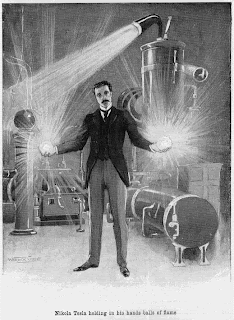
Same is the case with Nikoli Tesla, the man who is credited with not only the Alternating Current, but also known as the inventor of Radio. Whereas Marconi received the Nobel for Radio in 1909, Tesla was not even nominated in that year. The Magnetic field is measured by the name which was not considered for Nobel.
These two inventors, although were nominated during 1916, bad-mouthed each other so much that the Nobel committee decided to skip the Nobel award for physics that year.
But as the controversy takes its own time to metamorphose into fact, and finally turn into a butterfly, as does most of the controversies, let’s analyze some of the top 10 controversial decisions of the Nobel committee from its inception in 1901.
No. 10 – The Inventors War
When it comes to Inventions, the first name that will come to anyone’s mind is Thomas Alva Edison. There will be no text-books dealing with Physics or Electronics which do not have the name of Edison in them. But Edison never received a Nobel questioning the credibility of the award itself.
Same is the case with Nikoli Tesla, the man who is credited with not only the Alternating Current, but also known as the inventor of Radio. Whereas Marconi received the Nobel for Radio in 1909, Tesla was not even nominated in that year. The Magnetic field is measured by the name which was not considered for Nobel.
These two inventors, although were nominated during 1916, bad-mouthed each other so much that the Nobel committee decided to skip the Nobel award for physics that year.

No. 9 – E = MC2
In one of my Physics papers there was this question, that “For what did Einstein awarded the Nobel Prize?” I as usual did not go prepared for the exams, but believed that this is an easy one. Although I was a bit confused between “Theory of Relativity” and “Mass Energy Equation”, I took a gamble and went for “Theory of Relativity”.
But after the exams, it was a surprise that neither were right answers. He was awarded the Nobel on his explanation of the Photoelectric Effect in 1921. Even though when compared to his other theories which were instrumental in creating a new term called “Modern Physics” as opposed to the Newtonian Physics, he was never recognized for his path-breaking theories explaining relativity or Mass Energy relation.
Some see this as a fallacy and others say that this is justified because some of his theories were yet to be proved during those times, but at the end of the day, I did not clear my Physics paper.

No. 8 – Barracks Obama
The most recent controversy surrounding the peace prize, guess there is nothing required to talk more on this. It is time for the man to do it in action.
No. 7 – A Pre – Phosphorus mistake
The man who created the first periodic table of classification of the known elements, Mendeleev, never received the Nobel. He was nominated for the Nobel in 1906 but due to the behind the scene politics, he did not get the award. The Chemistry award that year went to a man who isolated fluorine from its compounds.
No 6. – War and Peace
1973 – Henry Kissinger gets the Nobel for Peace.
1969 – 1975 – Henry Kissinger was involved in bombing NVA infiltrators in Cambodia
1975 – Operation Condor, involving the assassination of more than 60,000 people belonging to the left wing in S. America. USA even though played a Supervisory role in this, Kissinger was the man on the forefront, allegedly well aware of the Operation Condor.
Nobel peace was put to good use in quelling all the opposing elements ensuring peace.
No 5 – Hesperisum – What is that ???
In 1938, Enrico Fermi was awarded the Nobel in Chemistry for creating this weird named element Hesperium. But later It was found that he has not created any new elements and the Hesperium is nothing but some isotope produced due to Nuclear Fission.
A Nobel once given cannot be recalled.
No 4 – Sabbatical wars
Anwar Sadat, the then PM of Egypt, who lead the Yom Kippur war, on the day of the Sabbath against Israel, was awarded the Nobel Peace Prize in 1978.
Also another person Menachim Begin, who was an alleged terrorist, against the British rule in Israel, was also awarded the Nobel Peace Prize the same year.
No 3 – The PLO and Peace Prize
1994 – Yasser Arafat, was awarded the Nobel Peace Prize. Arafat, a known terrorist leader, with a long history of violence was awarded the Peace Prize.
No. 2 – Ahimsa’s Way out
While Yasser Arafat, Anwar Sadat and Kissinger were given the peace prize, with known history of violence, the man who wielded his walking stick and travelled the nation promoting peaceful protests was shown the door by the Nobel Committee.
Gandhi was nominated five times and each time the Nobel committee failed to award him the Nobel. In 1948 after Gandhi’s assassination, no award was given stating that there was no living candidate with the word living underlined. This made sure that
Gandhi did not receive the prize even though he was nominated.
But Dag Hammarskjold was awarded the peace prize posthumously for being a fellow Scandinavian and not an Indian.
http://nobelprize.org/nobel_prizes/peace/articles/gandhi/index.html
No. 1 – Hail Hitler
Even though the Nobel Committee did not award the Nobel Peace to Hitler, he was still nominated for the award in 1936.
The list of nominees cannot be published until fifty years by the Nobel Committee, and when the list till 1955 was released, it was a surprise to find Hitler among the nominees.
Saturday, May 2, 2009
Bottom up Politics
On 26/11, when Mumbai was attacked by terrorists from Pakistan, the entire city was outraged by the act and at the same time was disappointed by the lackluster populism politics being played by our so called “leaders”. The gallant acts of protests which were organized in Mumbai following the attacks showcased the public discontent, especially among the youth for a change and reform oriented politics as contrary to the populist, vote-bank based, reactive and blame game political approach being followed currently. There was a hunger for justice around the population, hunger for justice for those innocent civilian life lost in the brazen attack, hunger for justice for those who lost their life fighting the terrorist menace all across the country.
But the recent elections for the Lok Sabha, 2009, the voters turnout and the court proceedings against Ajmal kasab, the lone terrorist who was caught by Mumbai police are proving that justice is a mere mirage in a country which is reactive and amnesic in its own nature.
The Judiciary is too busy in determining the age of Kasab, but to be honest does it matter how old he is, looking at the magnitude of his actions and the consequences. And the direction which the court proceedings are taking proves where our courts (With all due respect) are spending their efforts, in pointless arguments which are leading nowhere. Firstly does people like Kasab, require a court proceeding which will take another ten years to come to a conclusion. Does people like him require be defended that too by an Indian lawyer, the country against which the attack was launched. If justice has to be served the court should be able to expedite the case and the intelligence should be able t o extract valuable information about the terrorist infrastructure from Kasab.
While the court is too busy with the age factor, our Mumbaikars who raised there voice and rose together against the publicity politics were no where to be seen when it came to exercising their franchise. Either they have gone to their hometowns thanks to the long weekend or too busy watching IPL. This is clear from the fact that the voter turnout in Mumbai was a mere 43%, which seems to be a dismal figure compared to the furor after the attacks.
The process of change in India has been bottom up, the economic liberty of India in the last two decades are not state sponsored but came from individual growth aspirations. When the Indian growth story was taking place our populist politicians were busy thinking about how much subsidies, loan waivers, reservations, free electricity and other freebies, losing the pulse of the restlessness and aspirations of the country. Whether it is the number of entrepreneurs, the world class industries, the booming IT and services sector, the extra ordinary growth in trade or the change in the lifestyle, all of it came from individuals or communities with the state playing a minimal role.
But when it comes to the elections and politics, there seems to be lack of individual or community based participation is appalling. One side of the argument says that irrespective of the party we vote for, it will be the same wine served maybe in a different bottle. The same old story of populist politics will take the throne irrespective of the elected party. I cannot agree more on that, looking at the manifestos of the major political parties, there was not a single reform oriented action plan but populism seems to be ubiquitous with a rat race for the most subsidies.
But if we look at the individuals and independents who are contesting in the cities (like student groups and youth federations) at least in the city, some of the manifestos where reform based. To the surprise these fledgling political aspirants were able to diagnose the pulse of the populace better than the veterans. And looking at the non-voting populace, which is more than 50%, they have a say in shifting the favor towards reforms than subsidies.
But our non-voting populace is simply indifferent. If the anger shown in the Mumbai protests were channeled into the elections and voted for the right person, we could have seen a shift in the political orientation of the country and there could have been a bottom up shift in the politics of the country as well.
First and foremost of the reforms we require is in the electoral process and the people’s mindset towards politics. Only then the necessary reforms will follow….
Why IPL will not fare in the long run
“The Indian Premier League (IPL) has done wonders for bank balances across the globe” read one of the articles in The Telegraph. But how long is this dream run of the IPL going to last. All of us know that India is a cricket crazy country and rewards any form of cricket with bounties.
If we go back in history, the young India immediately after independence was an insecure country desperate for some recognition among the world countries. The desperation for recognition was only fuelled by the fact that we were constantly being ignored by the world countries. Worst of all, our very survival was dependant on the food and money supplies from the developed countries and the world bank.
When Edmund Hillary and Sherpa Tenzing achieved the feat of reaching the highest point in both the world and in history, there was a controversy over who reached the summit first. Desperate for recognition India proclaimed Tenzing to be the first person to set foot on the everest. Even though Tenzing was of Nepali origin and he was merely helping hillary to ascend the peak, Indians took pride in proclaiming Tenzing to be the first person on the everest with hillary’s name not even being mentioned. So desperate was the need for recognition….
Coming back to Cricket, the first ever test match India won was against England in 1952 in Madras followed immediately by a series win against Pakistan in the same year. These victories were soon forgotten because the next victory came in 1956 against New Zealand after four years. Soon this too was forgotten and it took us till 1971, a whopping 16 years, for a back to back series win against West indies and England respectively under the captaincy of Ajit wadekar.
The country growing more and more desperate day by day, due to the constant economic crisis, sectarian crisis, lack of recognition, bad government policies found a solace in cricket since it brought with it the much needed recognition for India.
Cricket Fever reached the crescendo with India winning the World cup in 1983, beating the West Indies, and then followed the Asia cup in 1984, and the World championship of cricket in 1985.
Cricket, was being crowned from a “solace for recognition” to a religion by itself. The victories after that and the emergence of world class cricketers like Gavaskar, Kapil Dev, Sachin, Azharruddin, Saurav Ganguly etc. made cricket as not only the unofficial national sports of India but also the most money spinning sporting event.
If we look at the history it was not the love for cricket, which made us love the game but the love for the country and yearning for recognition among the world countries which made cricket in India a success. The underlying passions that our country is able to win a championship in the world arena made us Indians exult with joy.
Looking at the IPL with the same prism, the same passion for one’s city or favorite team is either absent or artificially created by roping in film stars. Also in the teams there are more foreign players, stating the fact that the name Chennai or Rajasthan or whatever being prefixed to the team name does not have any significance for the viewer.
And thirdly being a fan of Sachin Tendulkar, I did admire his batting in the first IPL match against Chennai. But logically speaking being in Chennai, and as a fan supporting one particular side, I shouldn’t have done so. Again we Indians love to take sides, even though if we are in the wrong side we love to stick to our stand. So in IPL you have to either enjoy the game not caring about the side which is playing or you should be confused whether to support your city/state side or your favorite player or your favorite film star.
The very novelty of the idea and the marriage between cricket and Bollywood made IPL a money spinner in India, but how long will this dream run last. In view of the above mentioned reasons the long term prospect of IPL filling the bank balances is questionable.
Subscribe to:
Posts (Atom)